
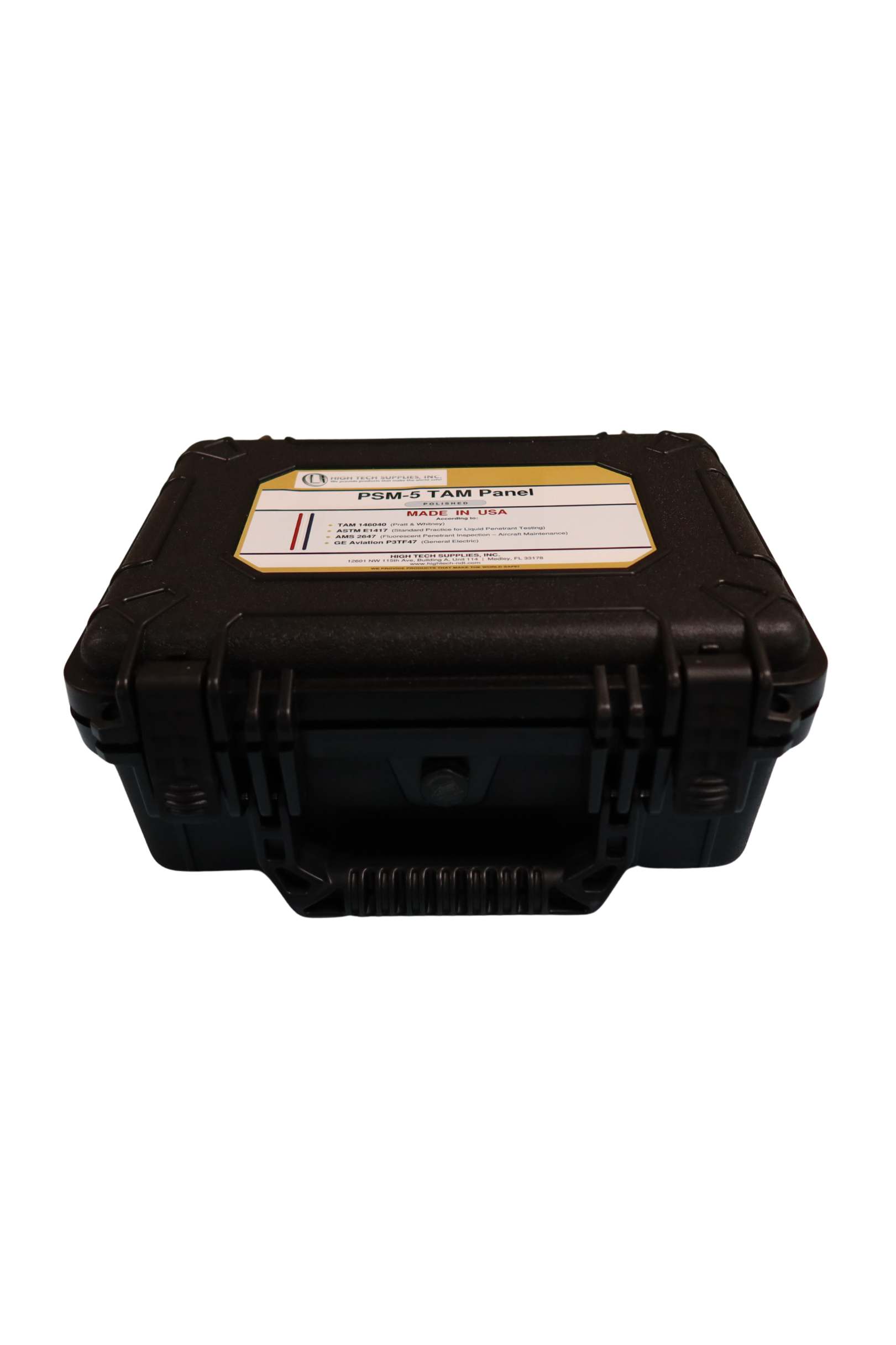
TAM – Testing & Monitoring Panel
Description
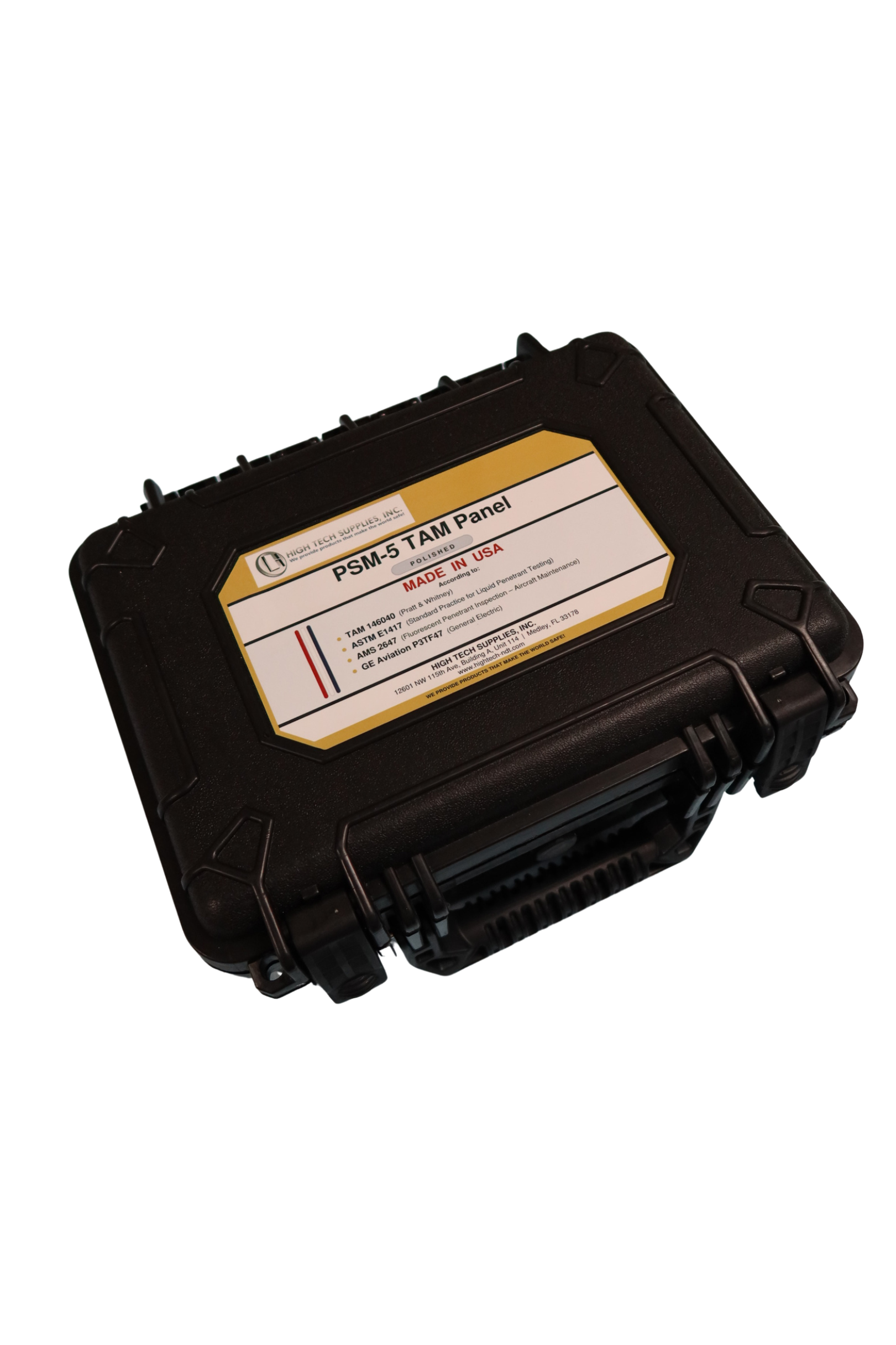
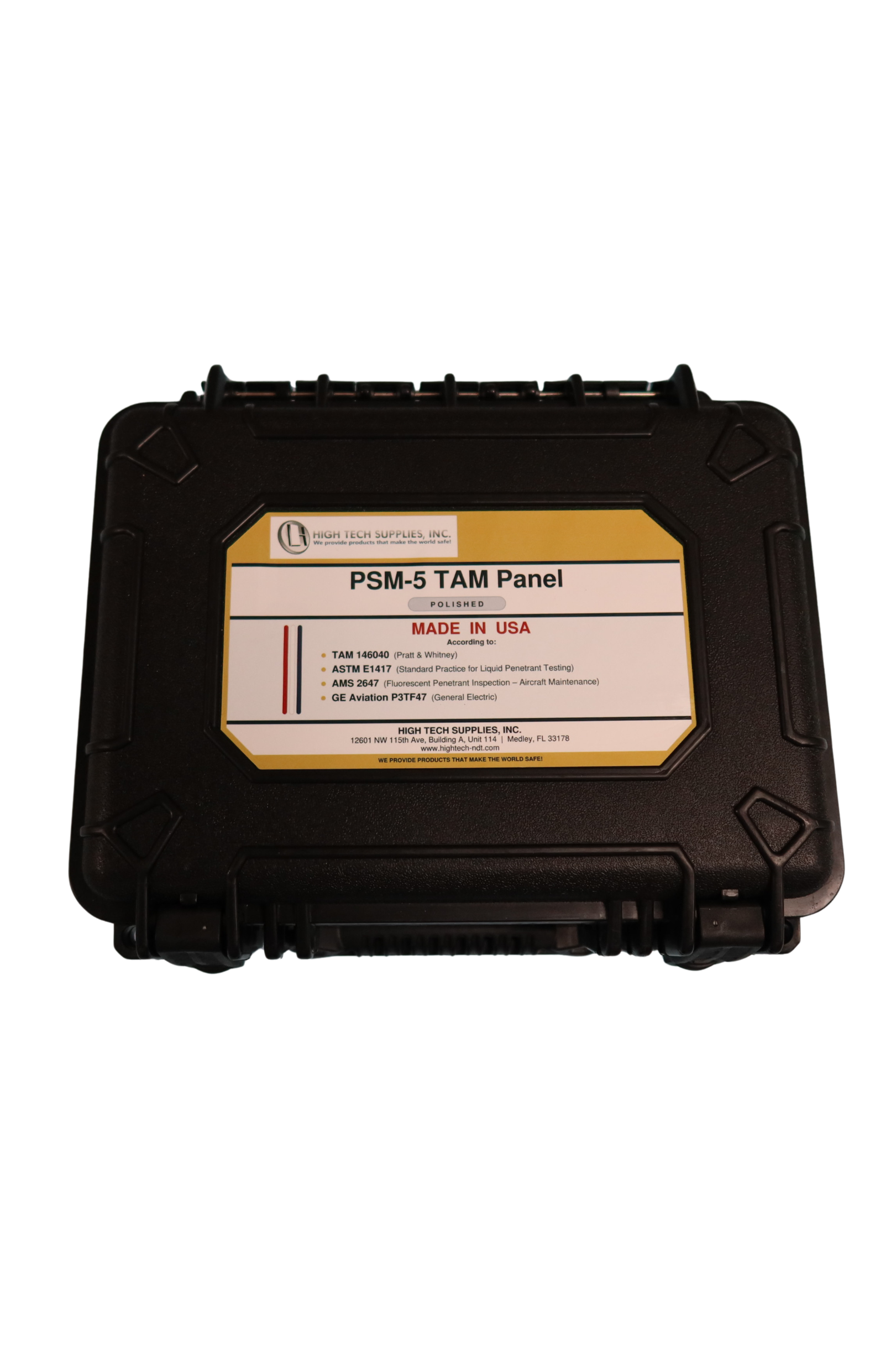
- TAM” stands for Testing & Monitoring. A TAM Panel is a standardized test piece used in the liquid penetrant inspection (LPI / PT) process to verify that the system (penetrant, rinse, developer) is functioning properly over time. Its main role is daily System Performance Tests, not as a sensitivity standard.
- The specification TAM 146040 (Rev M) establishes how these panels are made, how the defects (star cracks) should behave under inspection, and the acceptance ranges for the visible indications after processing.
- They are used to detect shifts or deterioration in your LPI process — e.g. if your removal, rinsing, or developer steps degrade, the visible cracks may grow or shrink outside acceptable ranges.
Key physical / functional features
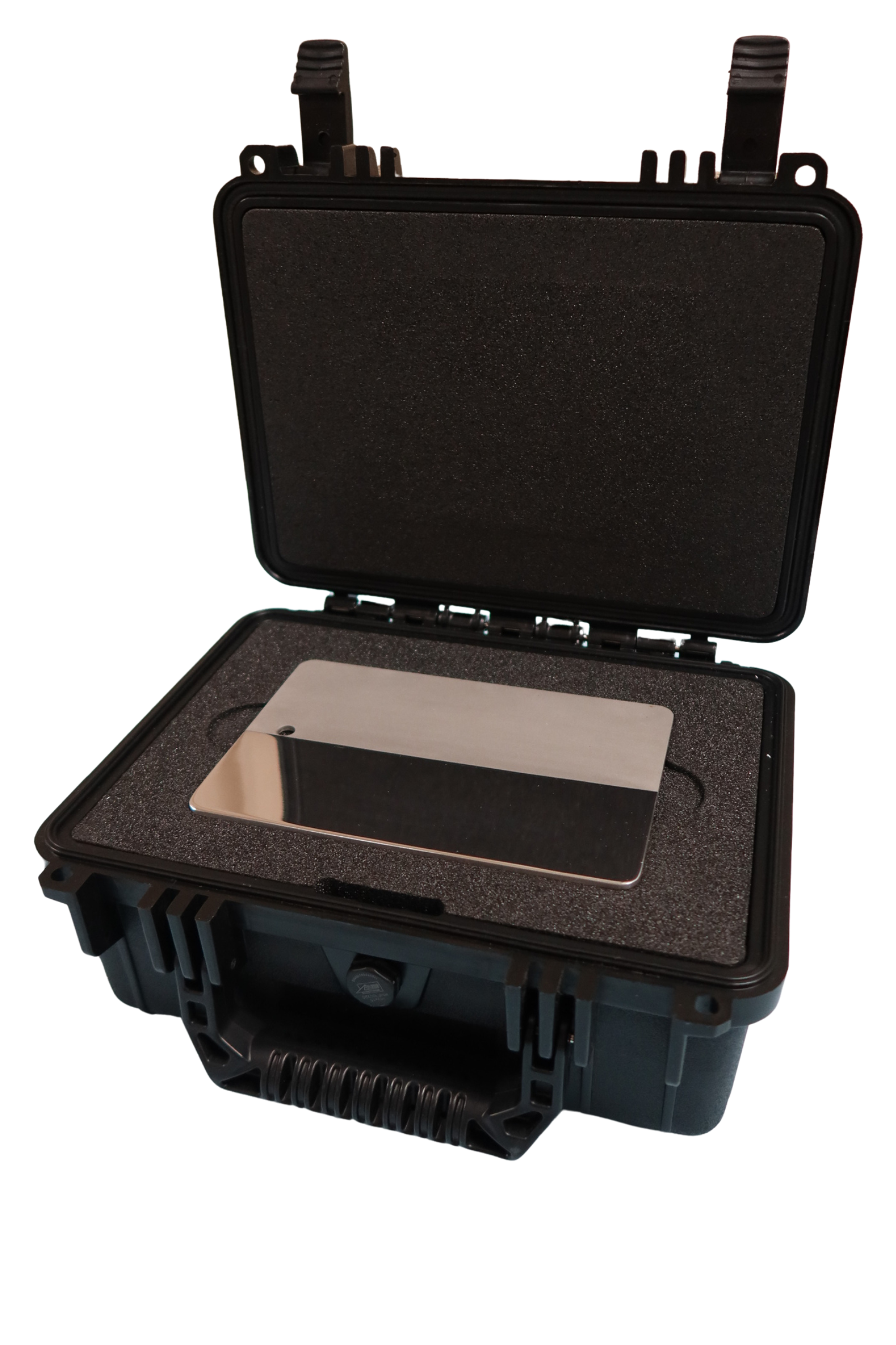
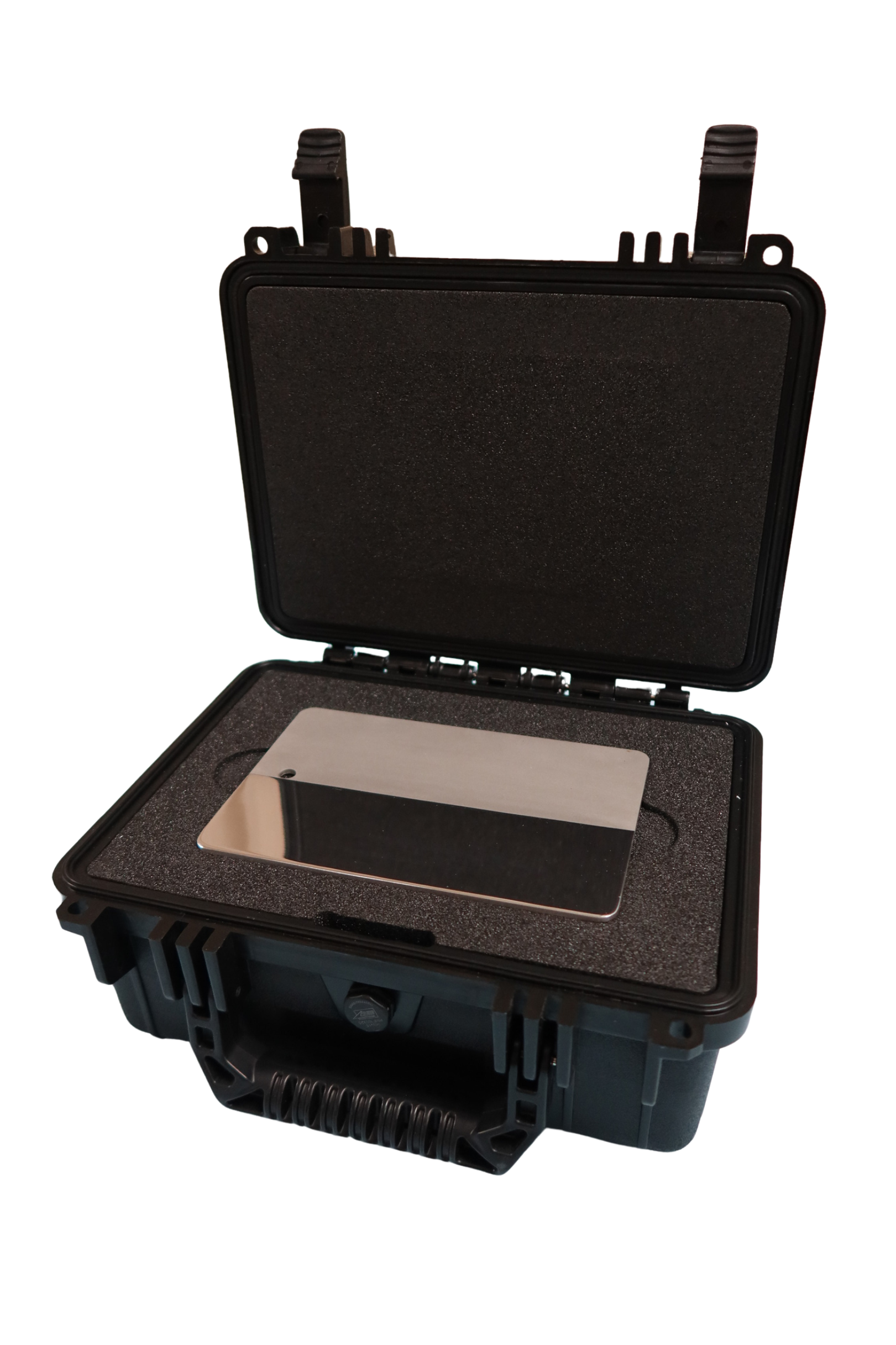
- The panel is a stainless steel substrate (0.090″ to 0.100″ thick) with a plated strip (hard chrome or similar) on one portion.
- Within the plated strip, there are five artificial discontinuities (starburst cracks) of decreasing severity (E, D, C, B, A).
- Adjacent to the plated area, a grit-blasted surface is often included (for washability / background checks) in many versions. The unplated region allows evaluation of residual penetrant/background after rinse.
- There are at least two “types” under the TAM spec:
• Polished / mirror chrome (TAM 146040-1)
• Grit / blasted chrome or full grit (TAM 146040-2) - Surface roughness, plating thickness, and grit-blast parameters are specified (or constrained) in implementation of the spec. For example, MR Chemie’s spec shows ~Ra = 0.15 µm for polished region, ~1.5 µm after grit on the unplated portion.
You must be logged in to post a review.


Reviews
There are no reviews yet.